
Product
How a goal becomes governed work.
ErezAgent is one runtime that keeps context and control as work moves from reasoning into execution. AI interprets and proposes; deterministic services hold state; execution gates decide authority; evidence records what happened.
- 01GoalA brief with a metric, a target and a timeframe
- 02BoardExecutive roles deliberate, challenge and synthesise
- 03MissionsPlanned against capabilities that are really configured
- 04AgentsWork runs through named skills and connectors
- 05ApprovalsConsequential actions wait for a person
- 06ResultsOutcomes are recorded with cost and audit
- 07LearningLessons and outcomes inform the next decision
In detail
Five steps, one record.
The same steps as the story on the home page, with what happens underneath each one.
01 Goal
A stated goal becomes a brief you can check.
Start from Executive Office, the command bar or voice. ErezAgent shapes what you said into a goal brief: the goal, a success metric with target, unit and direction, a timeframe, a scope (the whole company, a new venture or an existing one), constraints and language.
You fill in what is missing, then choose which drafts to create: a company priority, a new venture, a venture foundation or an objective. Drafts are never created active.
- Send to Board is available once metric, target and timeframe are set
- Or let the Board propose the metric, recorded as an assumption it will challenge
- Observers can read; operators and owners can edit
Nothing is saved as a priority, venture or objective until you confirm it.
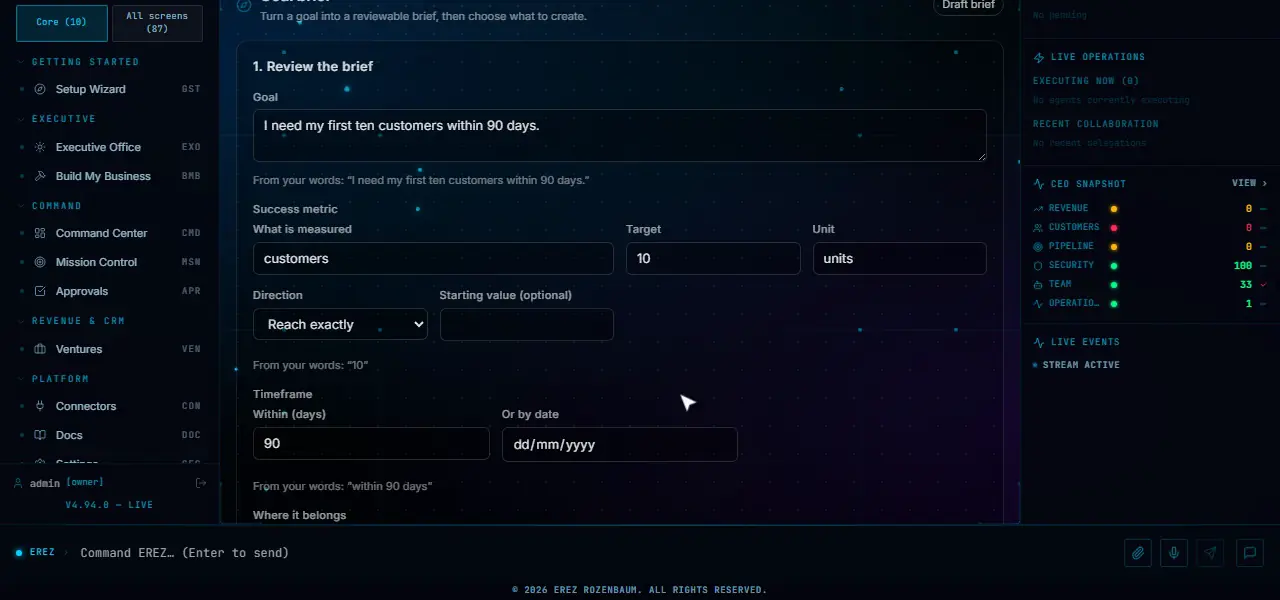
Fig 2.1Goal brief: review the brief, create drafts, then ask the Executive Board.Product footage from a demo environment with sample data. 02 Board
The Board deliberates with your context, not a blank prompt.
For a strategic objective the Executive Board combines Company Foundation, Venture Foundation, organisational context, past lessons and current operational evidence. Executive roles contribute independently, then a challenge round surfaces disagreement.
The synthesis gives a recommendation with conditions, the evidence the Board asked for, and falsifiable assumptions with a date to check each one. When the roles converge on the same reasoning, it says so rather than presenting it as independent confirmation.
- Abstention and requests for missing evidence are allowed outcomes
- Executive calibration from past outcomes informs later deliberations
- Approved direction becomes a measurable objective
The Board can say it does not know yet, and what it would need to find out.
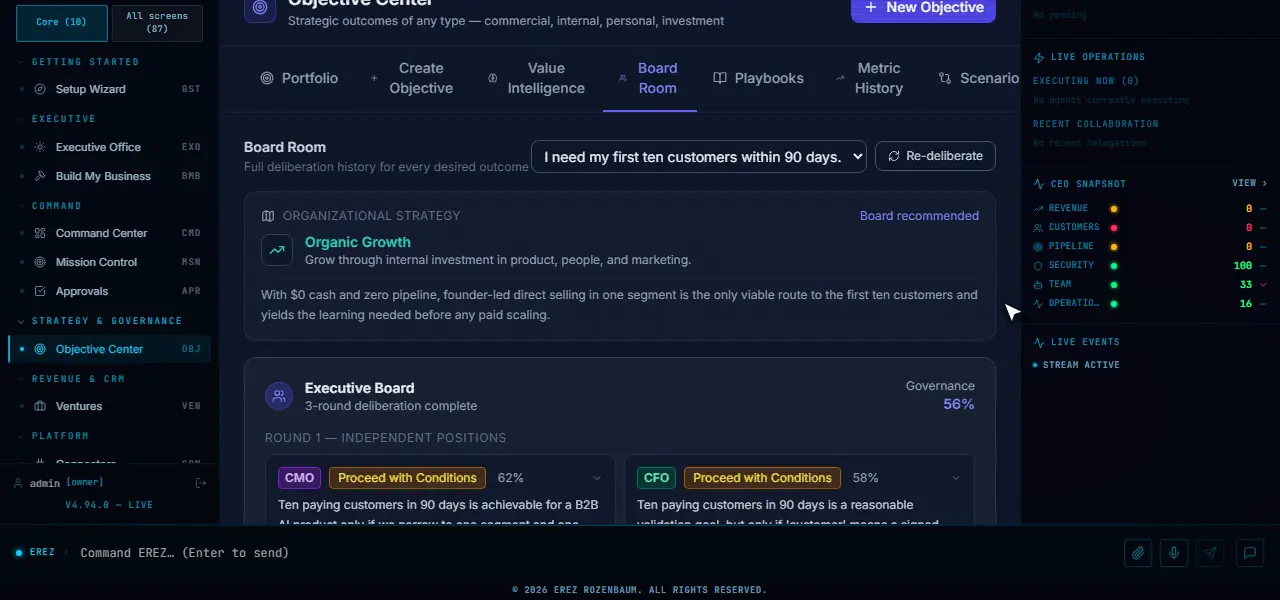
Fig 2.2Board Room: each role’s position, confidence, open questions and disagreements.Product footage from a demo environment with sample data. 03 Work
Missions are planned against what is really configured.
Mission planning decomposes an objective into ordered work while checking which skills, connectors and integrations are actually operational. A capability is reported as OPERATIONAL, CONFIGURED, DISABLED or UNAVAILABLE from real system records.
Agents carry out the work through named skills. Each turn assembles the agent’s persona, operating doctrine, venture and mission context and its permitted tools, and people and agents can own the same tasks.
- Delegation between agents keeps lineage and depth limits
- Agent identity never expands what the agent may do
- Failures surface in the attention and operating views
A step that needs something you do not have is flagged before the mission runs.
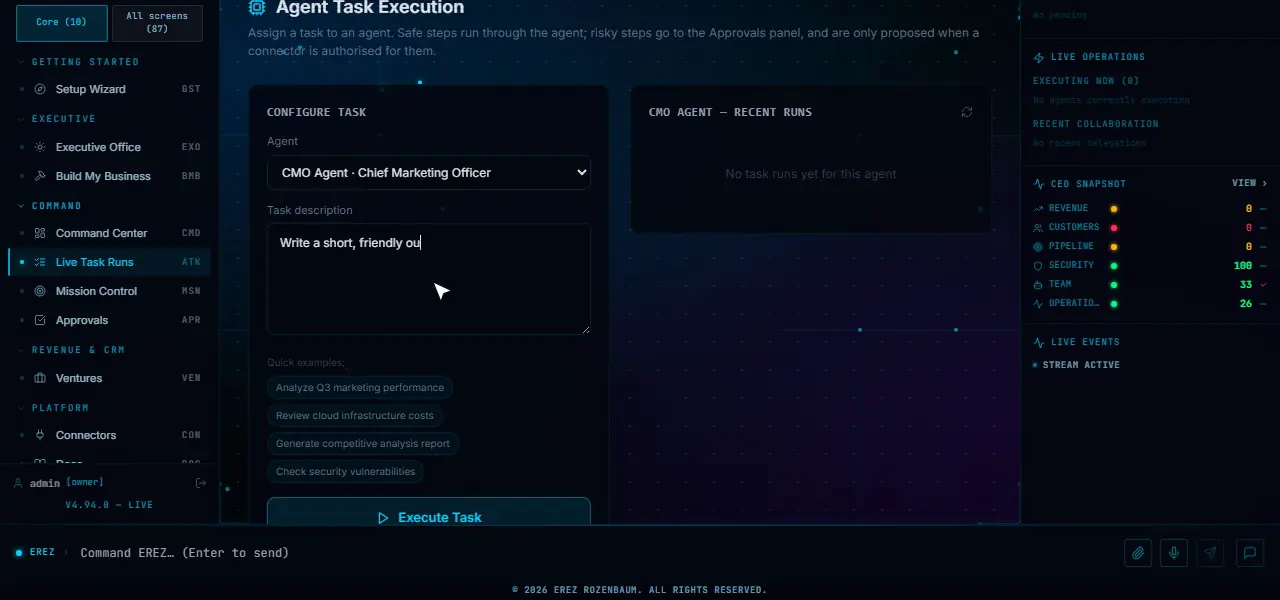
Fig 2.3Agent task execution: a task assigned to the CMO agent and its run.Product footage from a demo environment with sample data. 04 Approval
Authority is decided by the execution layer.
Every action, whether it starts in chat, a mission, a scheduled job, a connector or MCP, passes the Skill Executor. It validates permission and risk, checks the autonomy tier and the spending ceiling, runs the skill, records the invocation and captures cost.
T0 actions run immediately. T1 and T2 actions create a linked approval and pause until you decide; approving resumes them automatically. T3 actions are never autonomous.
- Any action rated Medium risk or above requires explicit approval
- Critical-risk actions cannot be set to auto-approve
- An owner-only kill switch pauses all missions and pending actions
Approve or reject in the app, inline from Action Center, or from Telegram.
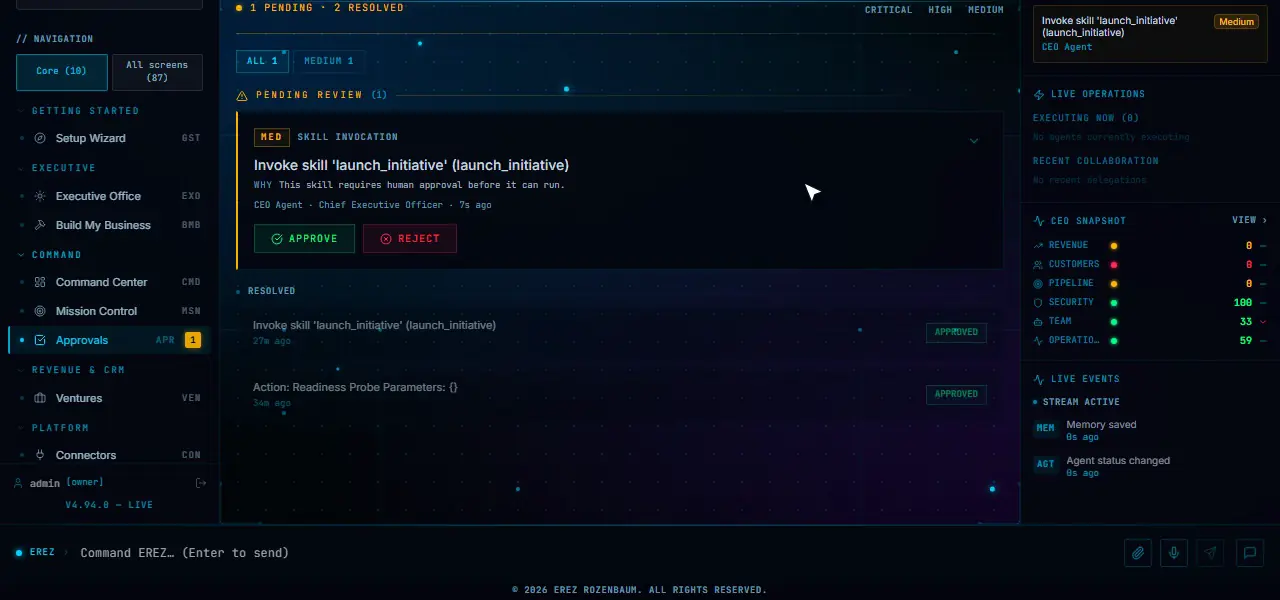
Fig 2.4Approval Center: a pending skill invocation, approved by the owner.Product footage from a demo environment with sample data. 05 Evidence
Results return as evidence for the next decision.
Every state transition of an execution run is written to an audit log with the acting agent or user: submitted, gated, approved, rejected, started, succeeded, failed, rolled back, cancelled. The log cannot be edited or deleted through any endpoint.
Model calls are measured for tokens and cost and attributed to the objective or work that caused them. Revenue, mission outcomes, customer health and operational events feed later decisions.
- A completed run with a declared rollback can be reversed with a compensating run
- Provider usage views label estimates separately from real provider data
- Lessons and outcomes feed the Board’s next deliberation
You can see what happened, who approved it and what it cost.
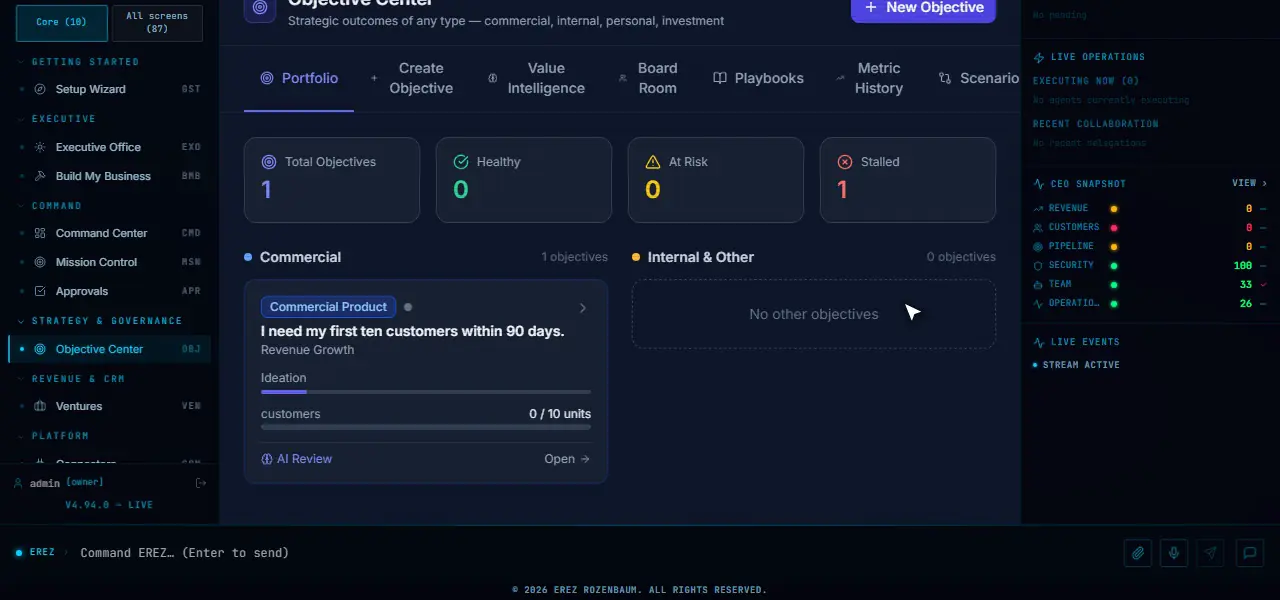
Fig 2.5Objective page: the target outcome, success metric and the Board’s recorded decisions.Product footage from a demo environment with sample data.
Execution substrate
Reasoning is separated from authority.
The language model can reason about what should happen. It does not gain permission to make the change. Before a side effect occurs, the request has to survive every check in the chain, whether it came from chat, a mission, a scheduled job, a connector or an MCP client.
Operating Doctrine adds rules for tone, evidence, publishing and spending per company, venture, department, agent or mission. Security floors and mandatory approval rules are excluded from doctrine, so no configuration can weaken them.
- 01CapabilityIs the skill granted and the connector operational?
- 02RoleDoes this user or agent’s role permit it?
- 03Risk and tierWhat is the action’s risk level and autonomy tier?
- 04SpendingIs it inside the per-action daily ceiling?
- 05Agent policyDoes the agent’s own policy allow it?
- 06ApprovalDoes it need a person, and has one approved it?
- 07AuditRecord the invocation, the result and the cost.
Ways in
Several ways to enter, one runtime.
A goal, an idea, a customer requirement or an existing business are different entry points into the same platform, not separate products.
Between conversations
It keeps working after the chat window closes.
Background workers run governance, mission execution, venture health, connectors, finance, security, backups, support, appointments, time-based rules and maintenance. A scheduled rule or health check is real work in a queue, not a model asked to remember something.
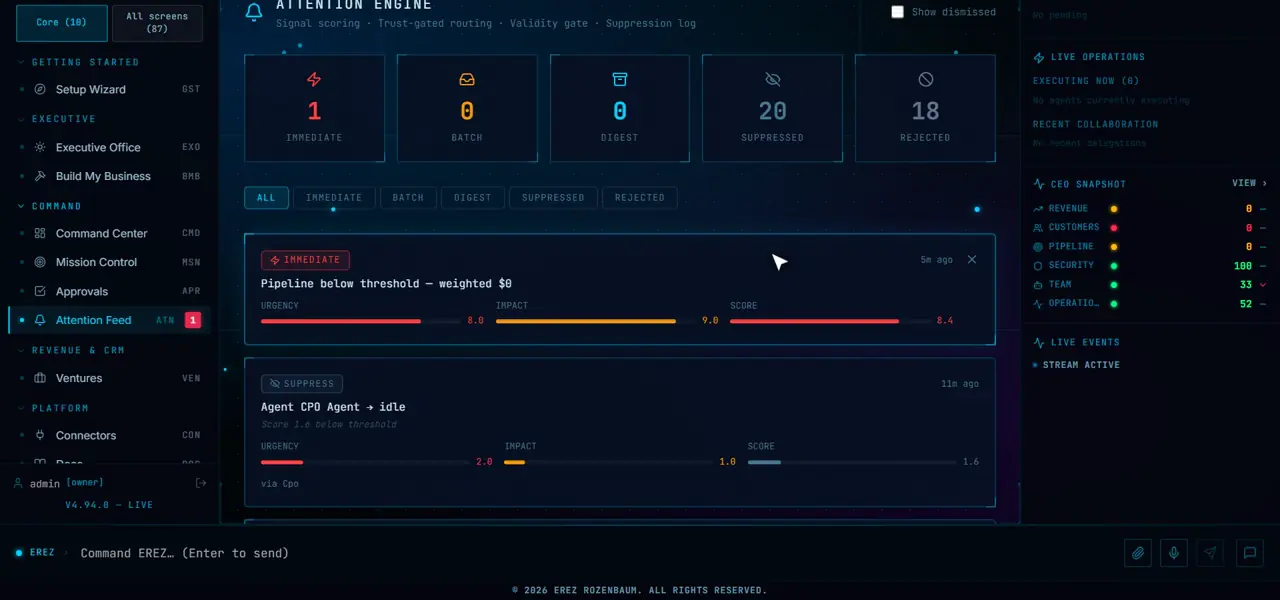
The Attention Engine and the morning briefing surface what changed and what needs you, and a single live event stream keeps the command center current.
Next step
ErezAgent runs the work. You stay in charge.
See it run on a goal of yours, apply for early access, or talk to us about delivering it to your own clients.
Paid evaluation and guided deployment: talk to us. See the plans.